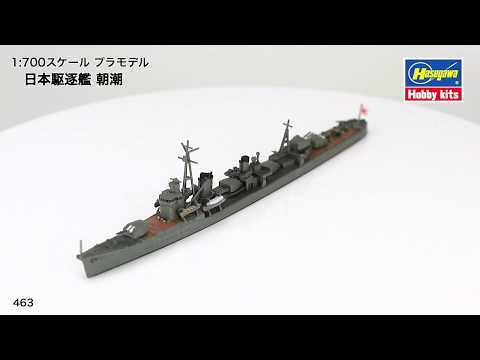

#168 IJN Destroyer Asagumo
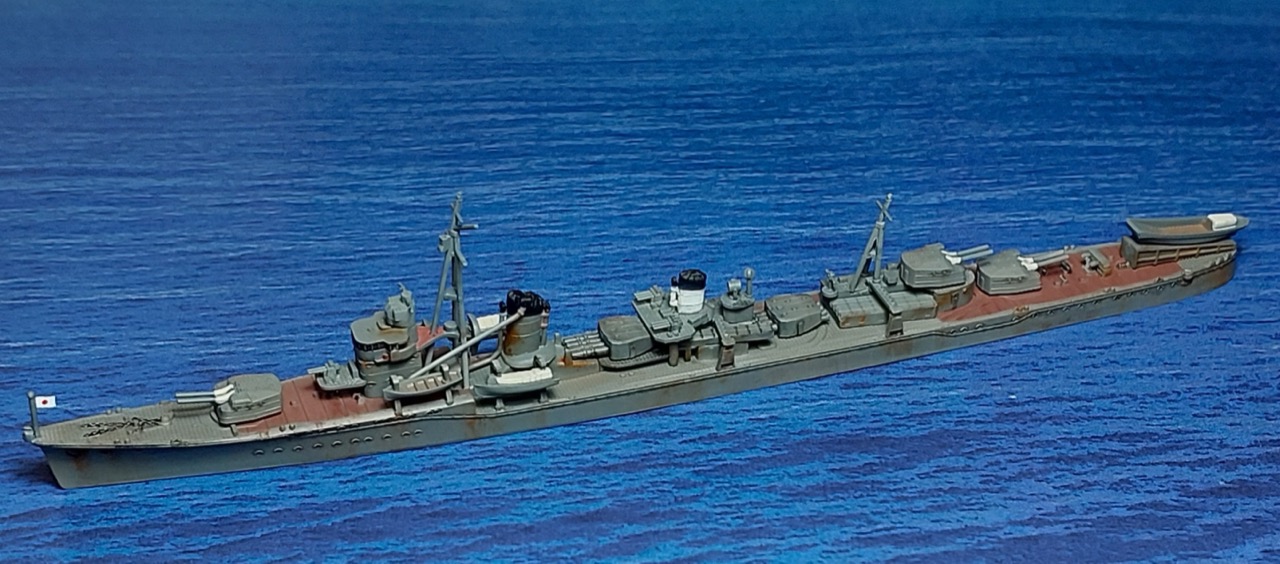
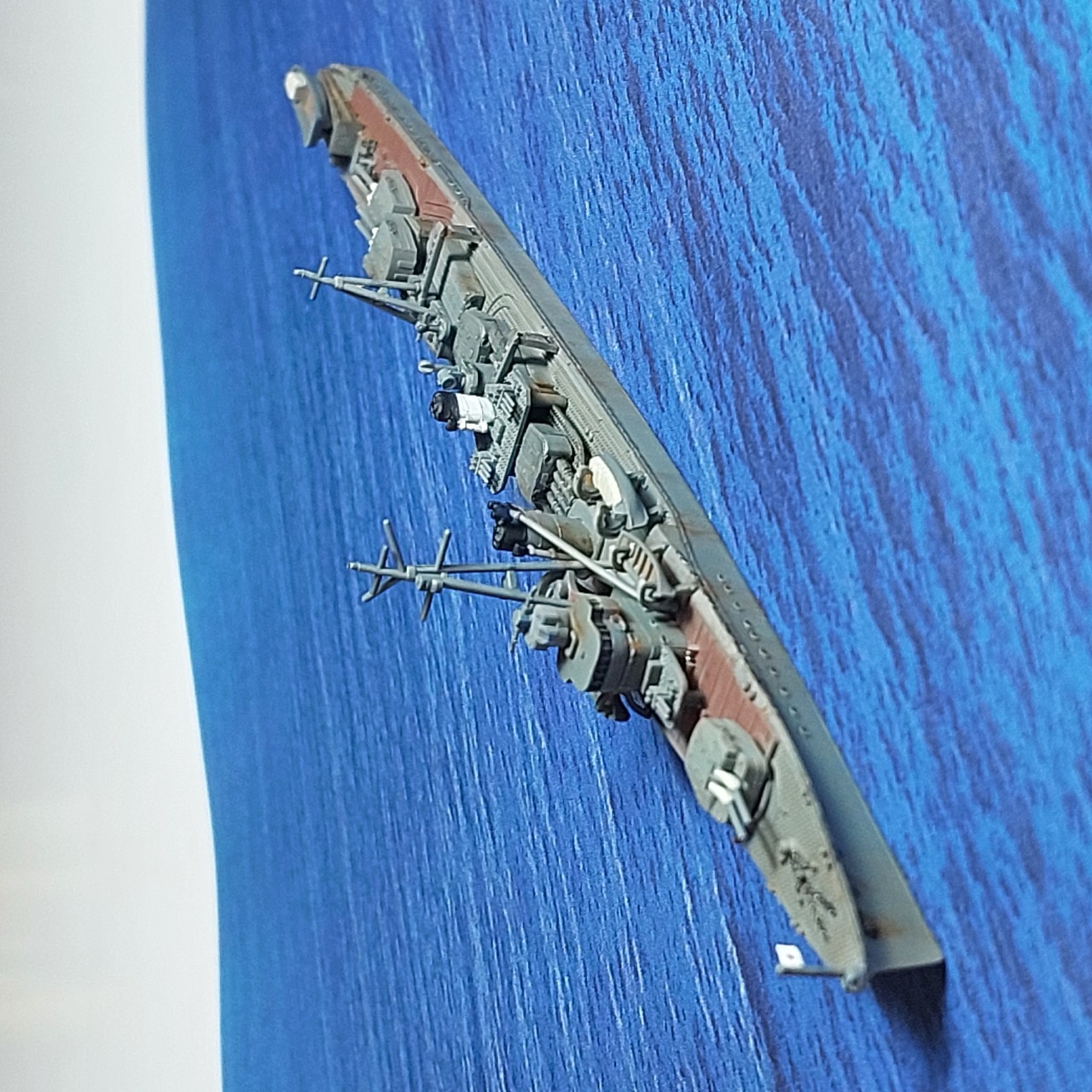
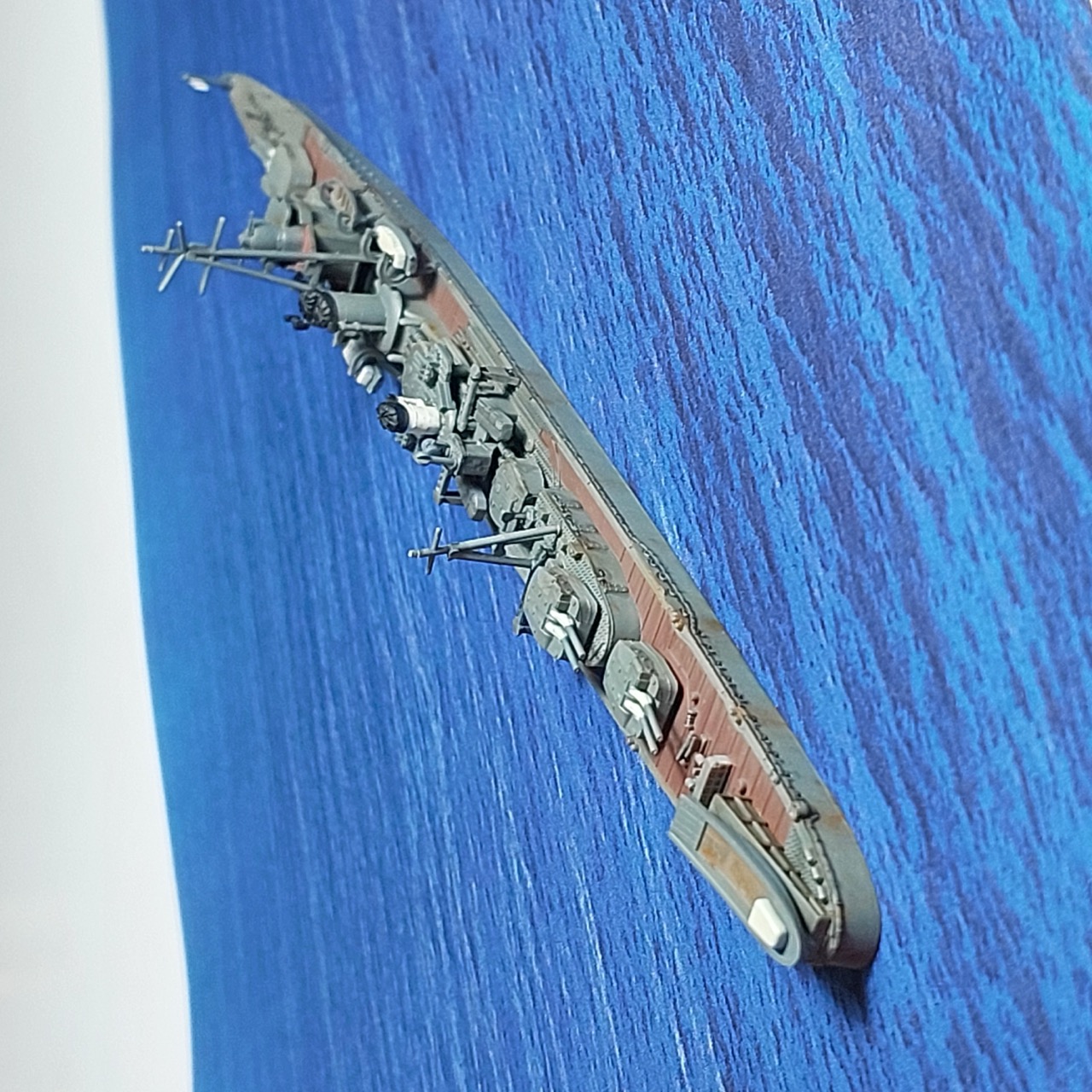
Building the Hasegawa 1:700 representation of the IJN Destroyer Asagumo 朝雲. Just a basic out of the box build without PE or rigging for now.
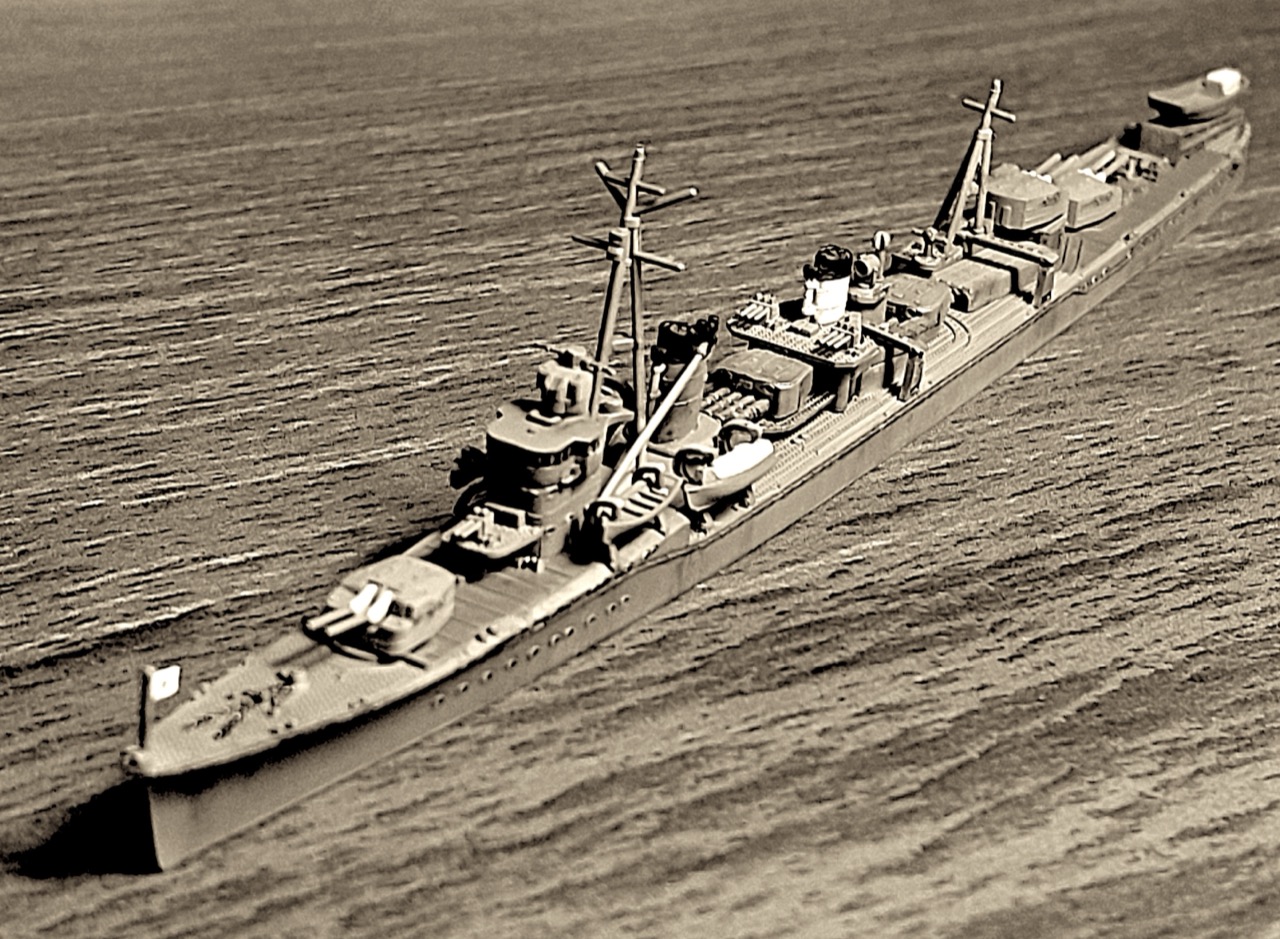
Notes
The Asagumo (朝雲, Morning Cloud, モグサア) was the fifth of ten Asashio-class destroyers built for the Imperial Japanese Navy in the mid-1930s under the Circle Two Supplementary Naval Expansion Program (Maru Ni Keikaku).
The success of the Asashio-class lead to the Kagerō-class, similar in design, but was slightly larger and incorporated a number of improvements which had been gained through operational experience. The Yūgumo-class was a repeat of the preceding Kagerō class with minor improvements that increased their anti-aircraft capabilities.
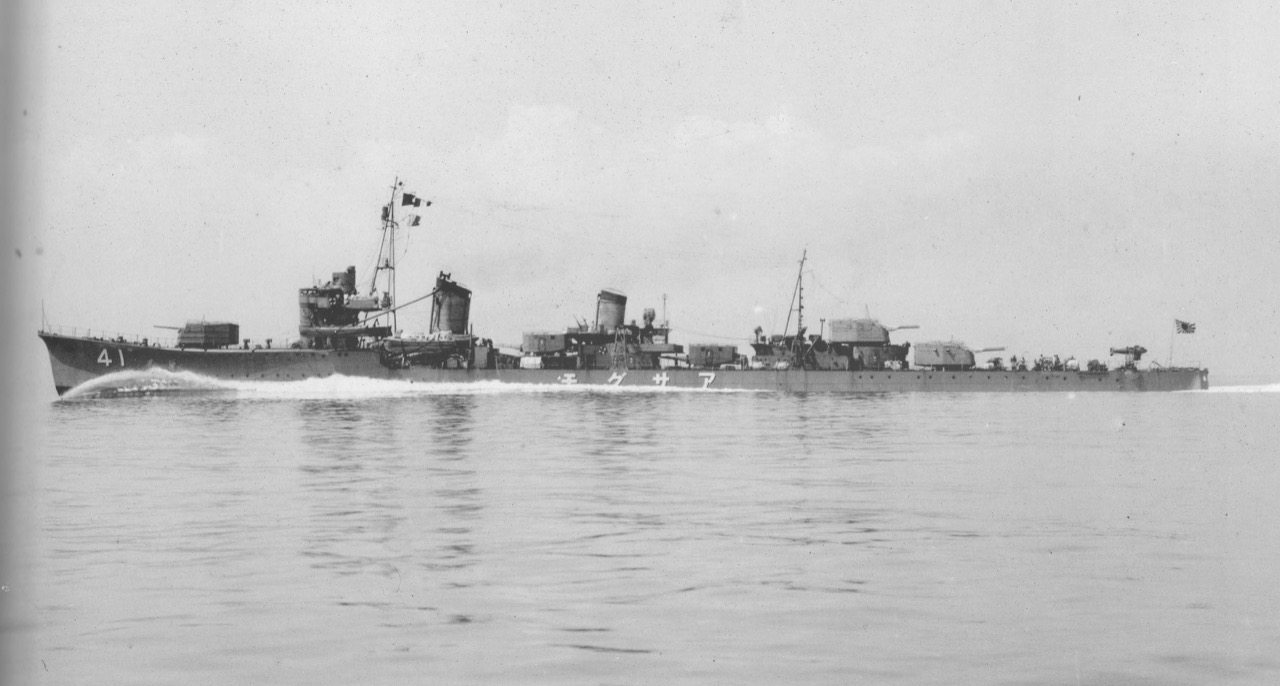
Key events from the record of movement:
- 27-28 February 1942: Battle of the Java Sea
- 4-6 June 1942: Battle of Midway
- 26 October 1942: Battle of Santa Cruz
- 12-13 November 1942: First Naval Battle of Guadalcanal
- 14-15 November 1942: Second Naval Battle of Guadalcanal
- 1-4 March 1943: Battle of the Bismarck Sea
- 19-20 June 1943: Battle of the Philippine Sea
- 7-17 July 1943: Initial troop evacuation run to Kiska, aborted due to weather.
- 22 July-1 August 1943: Second troop evacuation run to Kiska, successful on 29 July. With ABUKUMA, KISO, and five other destroyers, assigned to transport unit. Removed 476 evacuees.
- 22-25 October 1944: Battle of Leyte Gulf
- 25 October 1944: Sunk in Battle of Surigao Strait.
The Battle of the Java Sea (February 27, 1942)
This daylight engagement is highly documented because Asagumo was at the absolute epicenter of the destroyer duel that altered the course of the battle.
- The Duel: Around 5:45 PM, the Allied fleet turned to intercept the Japanese convoy. Asagumo and her sister ship Minegumo charged forward to engage the British destroyer HMS Electra.
- The Damage: In a vicious, close-range gunfight through heavy smoke screens, Asagumo’s gunners scored decisive hits on Electra, knocking out her power and leaving the British ship to sink. However, Electra’s return fire was highly accurate. A 4.7-inch shell ripped into Asagumo’s engine room, killing four crewmen, knocking out her electricity, and temporarily disabling her steering. Her struggle to keep her engines running while withdrawing is meticulously detailed in Japanese Destroyer Squadron 4 logs.
The Third Night of the Naval Battle of Guadalcanal (November 14–15, 1942)
This chaotic night battle is famous for the battleship duel between USS Washington and Kirishima, but Asagumo acted as a primary screen and aggressive attacker.
- The Ambush on US Destroyers: Operating in the dark near Savo Island, Asagumo targeted a line of American destroyers. She fired a devastating spread of Type 93 “Long Lance” torpedoes and engaged with gunfire, heavily contributing to the destruction of USS Monssen and damaging USS Walke.
- The Rescue Operation: Later that night, after the battleship Kirishima was mortally beaten by USS Washington, Asagumo came alongside the burning giant. Her crew helped evacuate hundreds of survivors, including the battleship’s captain, just before the vessel capsized. The timeline of her daring rescue under threat of further American attack is a staple of Guadalcanal naval histories.
The Battle of Surigao Strait (October 25, 1944)
As part of the catastrophic Battle of Leyte Gulf, Asagumo’s final hours are recorded with grim precision by both sides. The records even capture the personal experiences of her Chief Engineer, Tokichi Ishii, as he rushed to light the ship’s boilers to reach combat speed.
- The Torpedo Trap: At roughly 3:10 AM, Asagumo was caught in a massive torpedo ambush laid by American destroyer squadrons. A torpedo fired by the U.S. destroyer USS McDermut struck Asagumo, catastrophically blowing her entire bow clean off.
- The Last Stand: Miraculously, she did not sink immediately. Her crew managed to steer the heavily bleeding, bowless ship backward down the strait in an attempt to escape.
- The Dawn Sinking: At 7:07 AM, just after sunrise, she was spotted by the advancing American cruisers USS Denver and USS Columbia. Though completely outgunned and sinking, Asagumo’s crew defiantly returned fire using only her remaining aft turret. The American cruisers overwhelmed her, and she sank at 7:21 AM. The U.S. Navy recorded rescuing 39 of her swimming survivors, who provided firsthand accounts during intelligence interrogations.
Japanese evacuation of Kiska Island July 1943
The IJN Asagumo played a vital role in one of the most successful stealth operations of World War II: Operation Ke-Go, the Japanese evacuation of Kiska Island in July 1943.
Following the bloody fall of neighboring Attu Island to American forces, the 5,200-man Japanese garrison on Kiska was completely isolated, blockaded by the U.S. Navy, and subjected to constant aerial bombardment. Rather than forcing a suicidal last stand, the Imperial Japanese Navy executed a daring surface rescue utilizing heavy fog as concealment.
Asagumo’s specific contributions to the operation unfolded across two major phases:
Phase 1: The Aborted First Attempt (July 7–17, 1943)
Operating out of the Paramushiro naval base in the Kuril Islands, Asagumo was assigned to the primary transport force under Rear Admiral Masatomi Kimura.
- The fleet sailed for Kiska shrouded in fog, but as they neared the island, the weather cleared prematurely.
- Without fog to blind the American radar blockades, Admiral Kimura refused to risk his ships and ordered a retreat.
- Asagumo returned to base on July 17 after 10 days at sea, waiting for a better meteorological window.
Phase 2: The Rescue (July 22 – August 1, 1943)
On July 22, the fleet sortied a second time as a massive, dense fog bank rolled over the Aleutians.
- Slipping the Blockade: Capitalizing on a critical blunder where the U.S. blockade warships left their stations to refuel, the Japanese fleet slipped silently into Kiska Harbor on the afternoon of July 29, 1943.
- Rapid Embarkation: The evacuation was a masterclass in speed. In a span of just 50 minutes, the entire 5,183-man garrison boarded the waiting warships.
- Asagumo’s Haul: Asagumo acted directly as a troop transport, packed to the gills with 476 soldiers stripped of all heavy equipment.
- The Escape: The fleet turned around and steamed back through the fog at high speed. Asagumo successfully delivered her passengers safely to Paramushiro on August 1.
Because of the flawless execution by Asagumo and her sister ships, the Allies had absolutely no idea the island was empty. On August 15, a massive force of 34,000 Allied troops launched a full-scale invasion of Kiska. They stormed the deserted beaches and suffered over 300 casualties due to dense fog, friendly fire, and abandoned Japanese booby traps.
The Kit
I’ve used the Asagumo model from Japanese Navy Destroyer Yugumo, Kazagumo & Asagumo “Withdrawal strategy from Kiska Island” Hasegawa No. 30062 1:700.
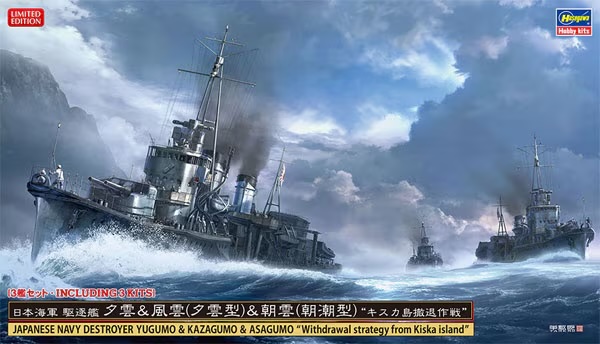
The Asagumo appears to be an updated (or at least significantly refurbished) mold of the Asashio from 2017: Japanese Navy Destroyer Asashio Hasegawa No. 463 1:700.
Paint Scheme
| Feature | Color | Recommended | Paint Used |
|---|---|---|---|
| navigation light port | Red | C3/H3 | H3 |
| Yellow | C4/H4 | ||
| navigation light starboard | Green | C6/H6 | H6 |
| Silver | C8/H8 | ||
| underwater hull | Cocoa Brown | C29/H17 | |
| hull, superstructure, cutter/launch/landing craft hull | Dark Grey (2) | C32/H83 | H83 |
| funnel tops, bridge windows | Flat Black | C33/H12 | H12 |
| launch/landing craft decking | Wood Brown | C43/H37 | H37 |
| cutter slats/interior | Tan | C44/H27 | H37 |
| gun baffles | Sail Color | C62-97%+C4-3% | H85 |
| Sail Color | C45/H85 | ||
| launch/landing craft canopy, funnel band | Flat White | C62/H11 | |
| deck (lighter, less red than C29) | Linoleum Deck Color | C606 | H37+H17(5%)+flat base |
Build Log
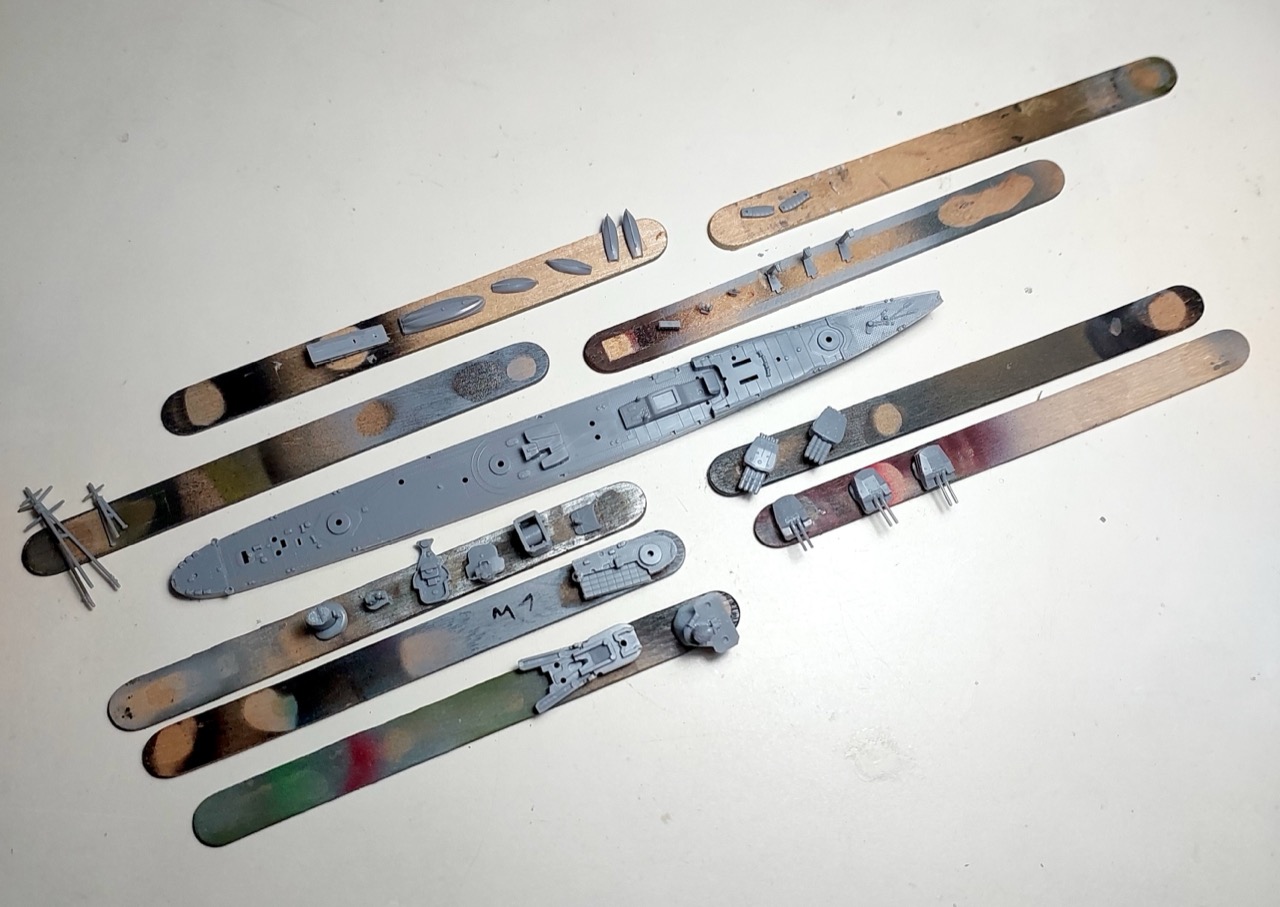
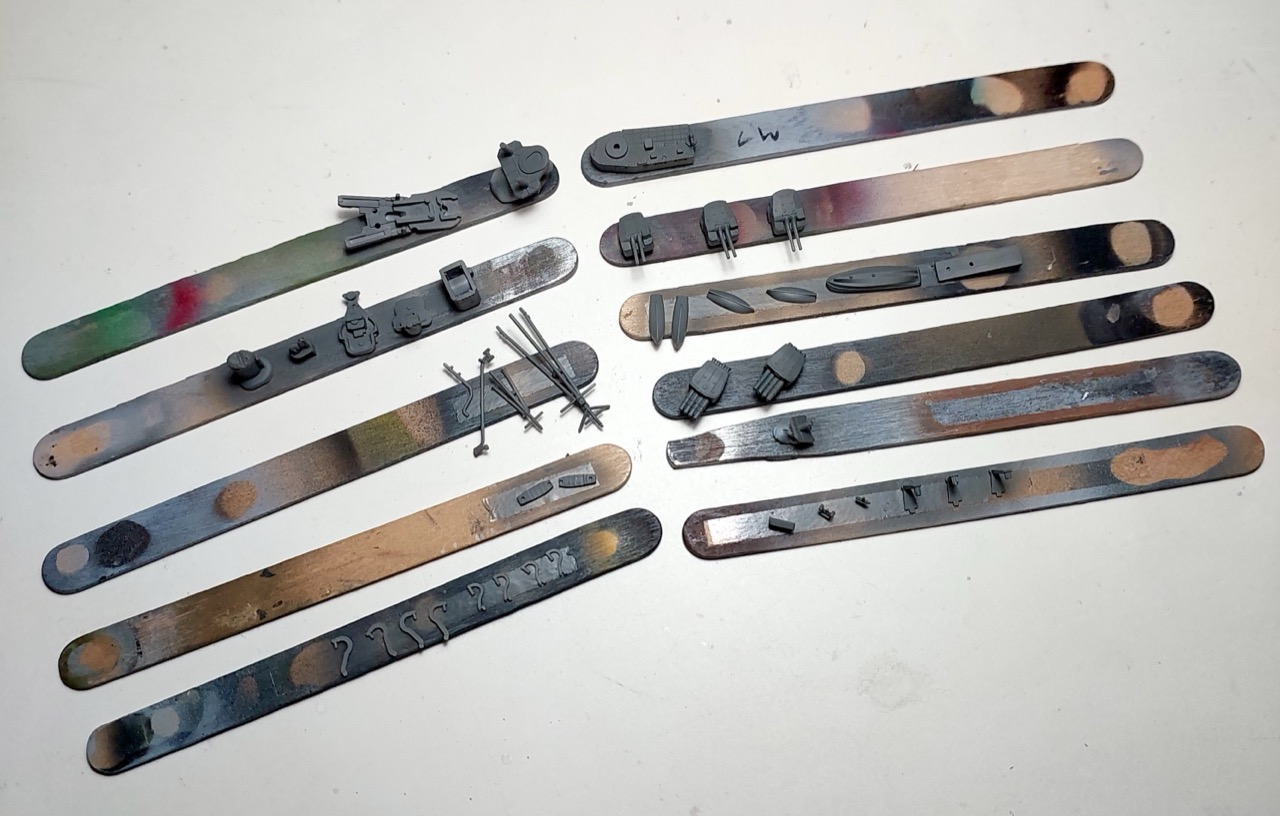
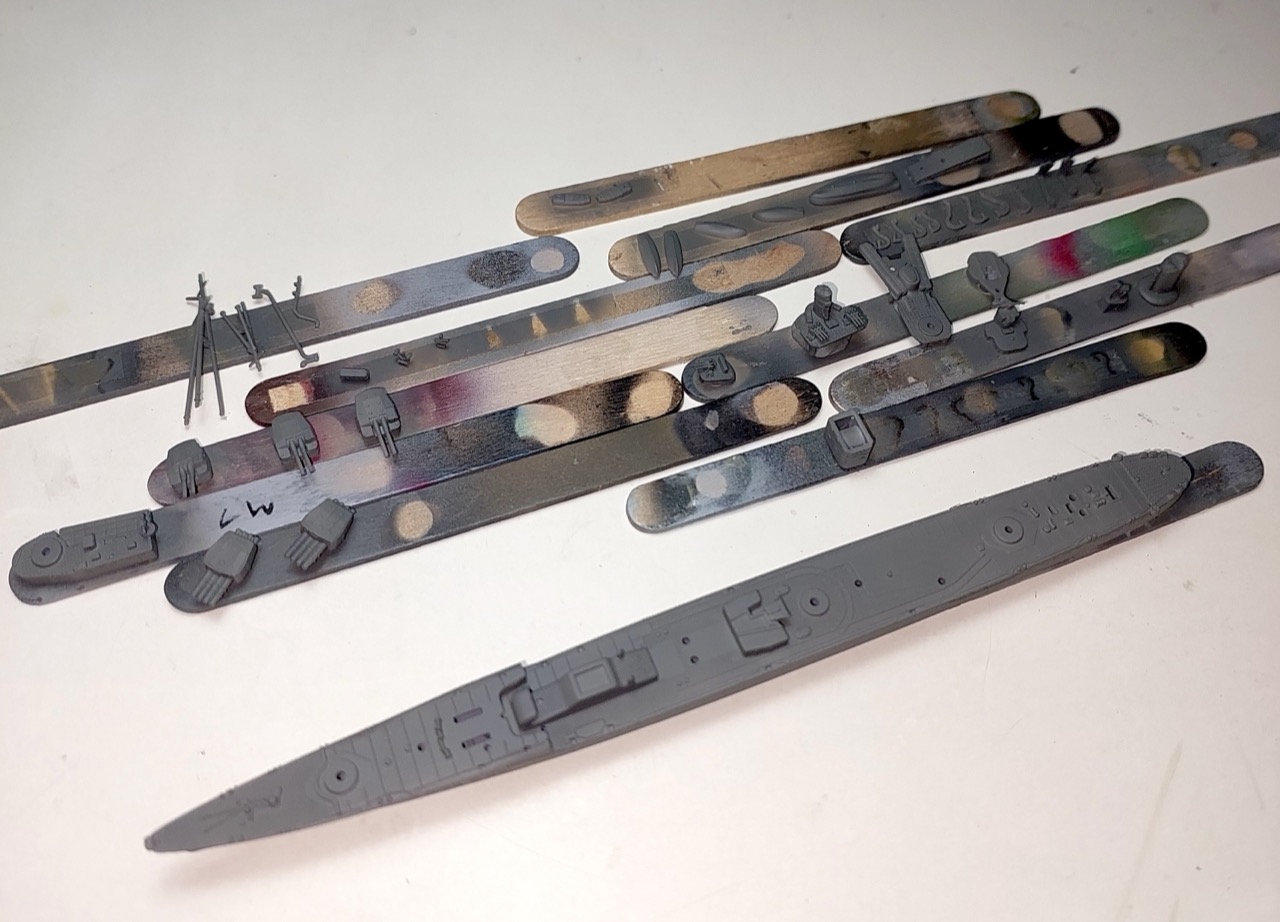
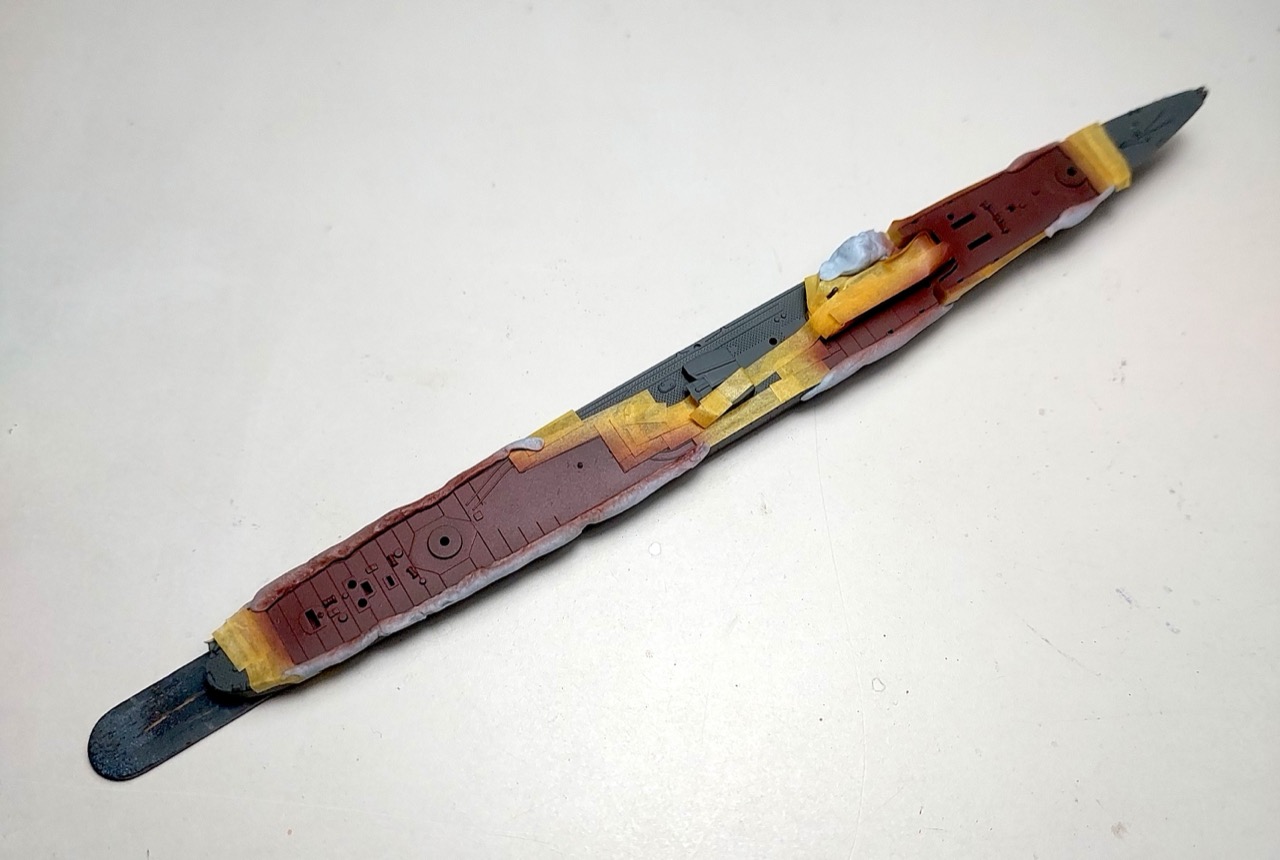
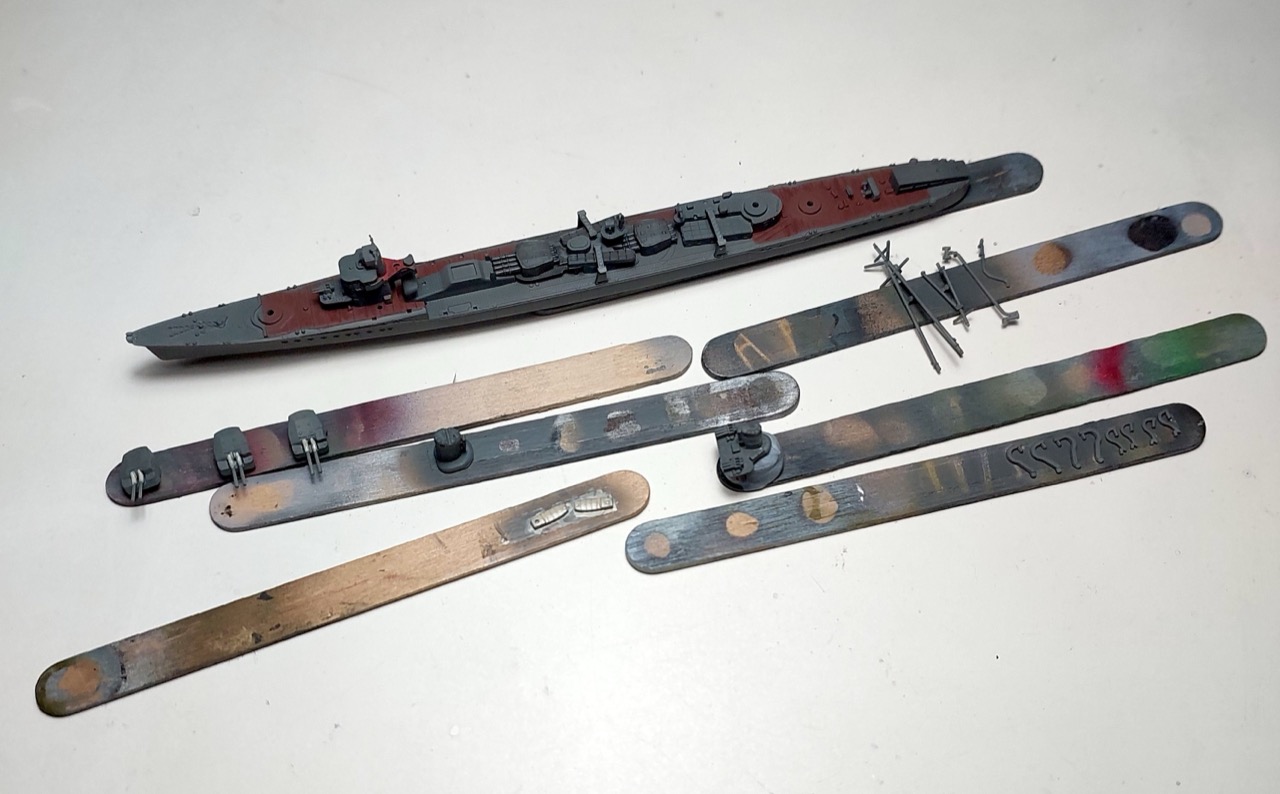
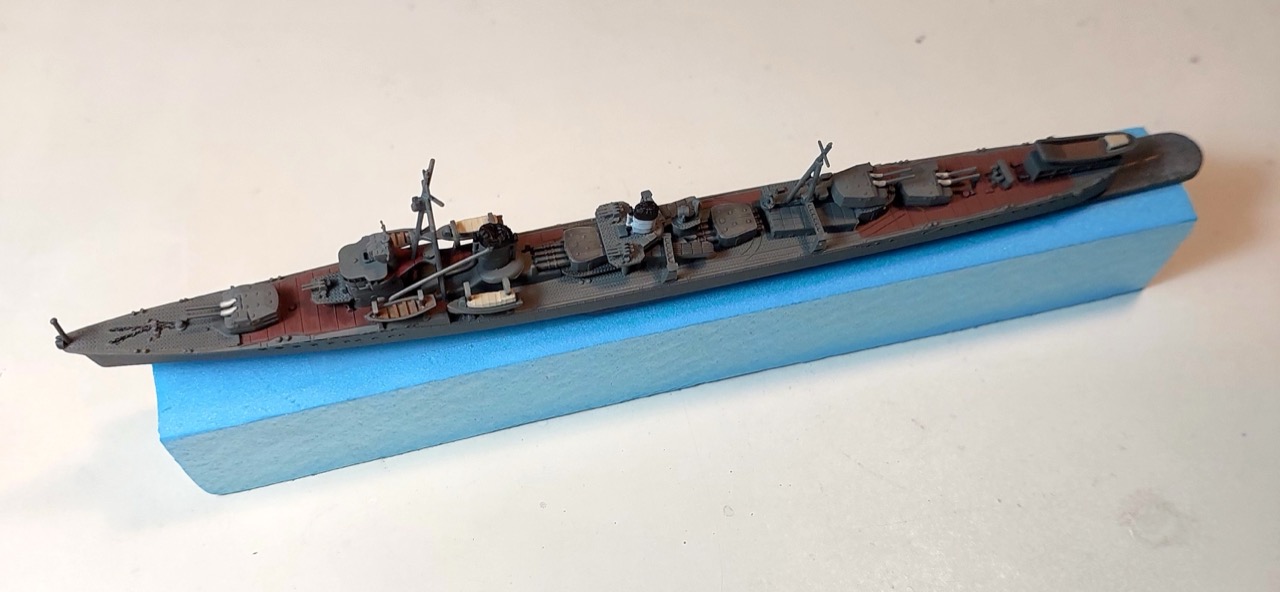
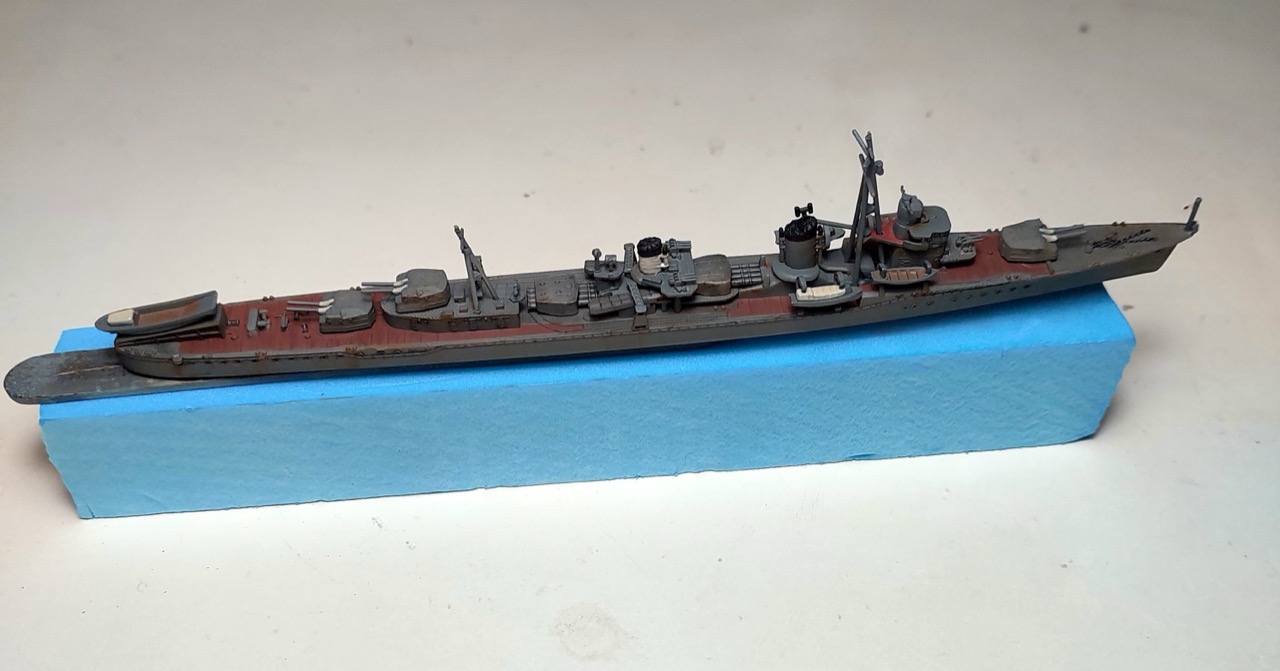
Final Gallery
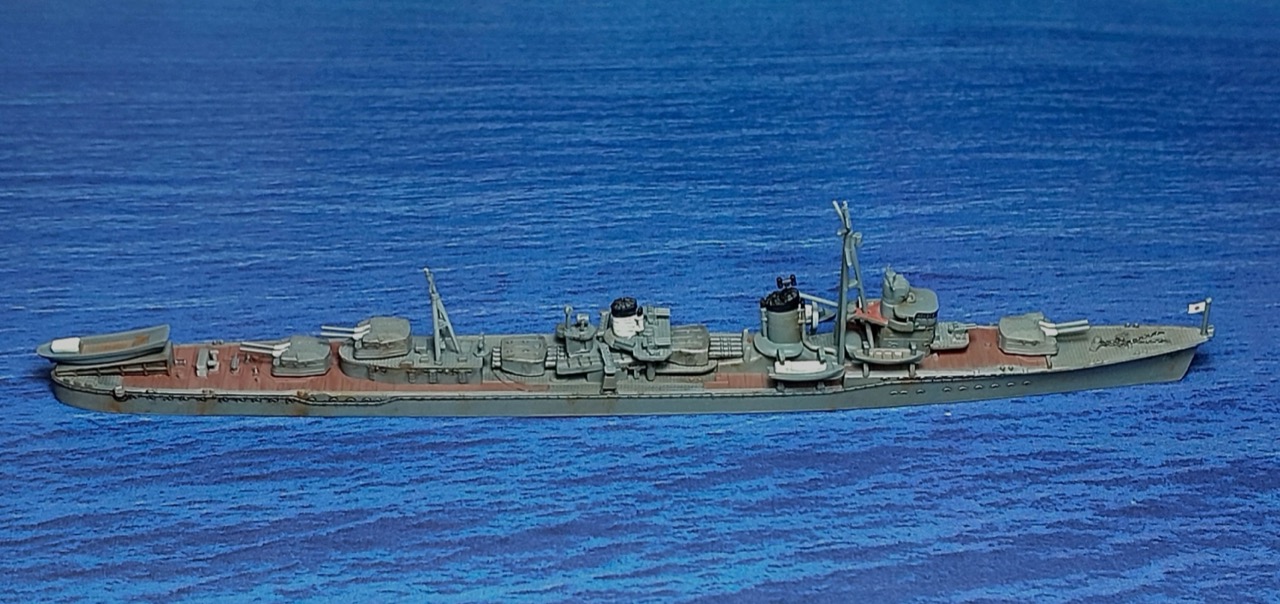
The IJN Destroyer Asagumo 朝雲. Just a basic out of the box build without PE or rigging, and no sea base for now as I have plans for this to end up in a diorama.
Credits and References
- this project on scalemates
- Japanese Navy Destroyer Yugumo, Kazagumo & Asagumo “Withdrawal strategy from Kiska Island” Hasegawa No. 30062 1:700
- on scalemates
- instructions
- Purchased from Hobby Point for SG$79.20 (Jun-2022).
- Japanese Navy Destroyer Asashio Hasegawa No. 463 1:700
Research References
- Asagumo
- https://en.wikipedia.org/wiki/Japanese_destroyer_Asagumo_(1937)
- https://ja.wikipedia.org/wiki/%E6%9C%9D%E9%9B%B2_(%E9%A7%86%E9%80%90%E8%89%A6)
- https://japanese-warship.com/destroyer/asagumo/
- IJN Asagumo: Tabular Record of Movement
- https://historica.fandom.com/wiki/Asagumo
- https://military-history.fandom.com/wiki/Japanese_destroyer_Asagumo_%281938%29
-
IJN Fleet Destroyers: http://www.niehorster.org/014_japan/navy-commanders/dd.html
- https://en.wikipedia.org/wiki/Battle_of_the_Java_Sea
- https://www.thoughtco.com/battle-of-the-java-sea-2361432
- https://www.history.navy.mil/content/history/museums/nmusn/explore/photography/wwii/wwii-pacific/leyte/surigao-strait.html
- https://www.facebook.com/100092236158772/posts/after-an-engagement-in-the-surigao-strait-in-1944-the-crew-of-pt-321-are-seen-pu/854530727631458/
- https://ww2db.com/surigao/BattleOfSurigaoStraitExcerpt.pdf
- https://www.usni.org/magazines/proceedings/1958/december/battle-surigao-strait
- https://warfarehistorynetwork.com/article/how-battle-of-surigao-strait-brought-revenge-for-pearl-harbor/
- Kiska
- https://en.wikipedia.org/wiki/Japanese_occupation_of_Kiska
- https://www.usni.org/magazines/proceedings/1958/february/mysterious-withdrawal-kiska
- https://www.youtube.com/watch?v=GejZ7ZjJYTQ
- https://pacificwrecks.com/location/alaska_kiska_harbor.html
- https://www.usni.org/magazines/proceedings/1958/february/mysterious-withdrawal-kiska
- Japanese Occupation Site National Historic Landmark - Aleutian Islands World War II National Historic Area
- Japan’s World War II on Kiska Island: Previously Undocumented Features on the Vega Bay Coastline
- 太平洋奇跡の作戦 キスカ Taiheiyô kiseki no sakusen: Kisuka
Developing Asashio, Kagero, & Yugumo
YouTube by CentralCrossing
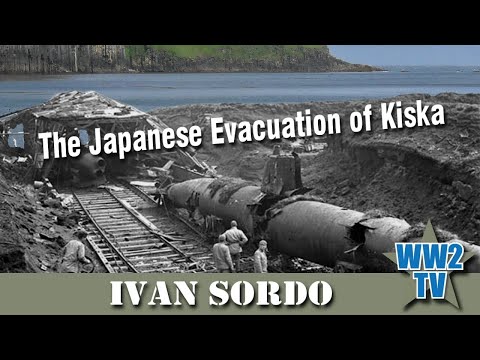
The Japanese Evacuation of Kiska
YouTube by WW2TV
The Retreat from Kiska (1965) Theatrical Trailer
YouTube by NIHON CINEMA
Build References
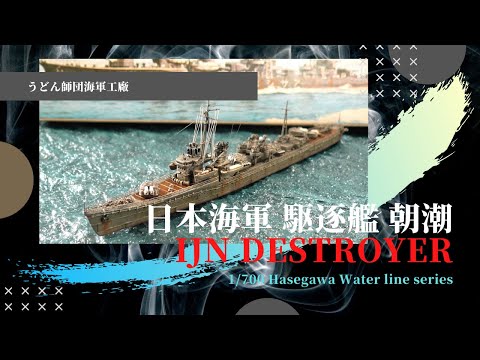
【ウォーターラインシリーズ】ハセガワ 1/700 日本海軍 駆逐艦 朝潮 を作ろう -Hasegawa 1/700 IJN Destroyer Asashio
YouTube by うどん師団
1:700プラモデル「日本駆逐艦 朝潮」
YouTube by プラモデルメーカー ハセガワ